
The Budget emphasises on capacity building and empowerment of marginalised sections of society including farmers.

energy is India's binding supply-side constraint for inclusive growth.

IMF MD Christine Lagarde hailed the government's latest Budget.

Budget for women and children welfare increased from Rs 1,56,528 crores to Rs 1,84,632 crores for 2017-18


'Any future course of action towards active participation in the alliance when formed would need a lot of deliberation, long term vision and should be in our best national interests,' notes Commodore Vengalil Venugopal (retd).

Japanese Prime Minister Shinzo Abe's $12-billion loan at an incredibly low interest rate may have trumped China's aim to enter the enormous Indian Railways market, notes A K Bhattacharya.
The NDB will have an initial authorised capital of $100 billion.

'If you look at this Budget, except for the Rs 2 increase in petrol and diesel, there is no positive or negative impact from the Budget for the common man.'

Indian economy about to take-off

Stepped up public expenditure must be accompanied by focused policies, advises Vinayak Chatterjee.
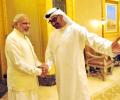
Apart from key bilateral issues, the two leaders also discussed situation in the region, particularly in wake of the increasing threat of terrorism and extremism from various sources including the Islamic State militant group.

The Bharatiya Janata Party lined up several promises, including a legislation to protect traditions of the Ayyappa temple at Sabarimala and a law against "love jihad", while assuring employment for at least one person from each family and free laptops to high school students, in its manifesto for the assembly polls unveiled in Thiruvananthapuram on Wednesday.
However, the budget arithmetic is slightly optimistic.

Banks are in need of government support to manage the stressed assets
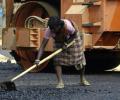
Most of these road contracts are spread across Andhra Pradesh, Haryana, Karnataka, Odisha, Rajasthan, Tamil Nadu, Uttarakhand and West Bengal, with the government struggling to restart them.

Russian firms expand their footprint in India. And take bigger steps to do business with India's private sector.
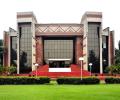
The one-size-fits-all approach adopted by the AICTE is not suitable for regulating business schools in India, argues Asish K Bhattacharyya.
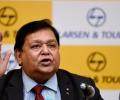
'Revival is happening slowly.' 'But that is, if the pandemic is controlled.'

The two major railway unions have proposed to the government an unprecedented alternative to privatisation or inviting foreign investment, to help raise funds and improve revenue.
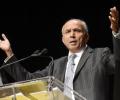
The IIT-Madras alumnus, who moved to Canada for an MBA programme and settled there, is not new to investing in India.
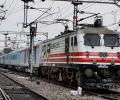
To facilitate foreign direct investment (FDI) in high- speed rail projects, the government is likely to allow private sector entry in operations.

Allegations of a particular market player being favoured over others were flying thick and fast in the early days of the scam.

The economy hasn't gathered even half the traction that some of us assumed it would just a year back.
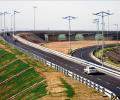
The assumption clearly was that project execution timelines would be adhered to and revenues would flow in as scheduled.

Significantly, about half of the CEOs who took part in the survey indicated that they propose to increase their investments in near future, 45 per cent cited no change in investment levels, while only 5 per cent expected a fall.
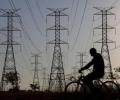
Centre meets target of 18,000 villages but household metering remains a challenge

AAP will have to learn to be patient as such electoral changes do not happen in a hurry, asserts Ramesh Menon.

The road ministry has put forward two proposals before the Prime Minister's Office and the finance ministry.

The RBI governor's assurance should give investors enough confidence to start believing in the NBFC sector again, say bankers.

The next Rail Budget to be presented early next year could contain a proposal for raising fares to pass on the burden of rising power cost to passengers.

One hopes that the government will act on the Kelkar panel recommendations.

Here's the full text of President Ram Nath Kovind's customary address to the joining sitting of Parliament on the first day of the budget session.

Finance Minister Nirmala Sitharaman's Rs 30,600 crore government guarantee for the bad bank has changed the body language of bankers for the better, observes Tamal Bandyopadhyay.

The Indian PM shares the honour with Japanese PM Shinzo Abe.

Santosh Kamath, partner (infrastructure and government services), KPMG in India, expects an extension of a tax holiday for the sector.
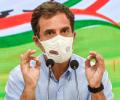
Gandhi said that the BJP government has clearly mishandled the economy that was built by the United Progressive Alliance government, and is now resorting to selling the country's assets as a "last resort" to generate some money.

'No Budget has so far has addressed the issue of the government's abysmal productivity of capital spending, improving which will be the big game changer. 'But, the government's tight lock on businesses, banks, education, and even essential services like transportation and large parts of infrastructure and healthcare is destroying capital year after year,' points out Debashis Basu.

The Budget sets out a comprehensive vision.

'COVID-19 will not stop the expansion of China's 'infrastructure power'.'
